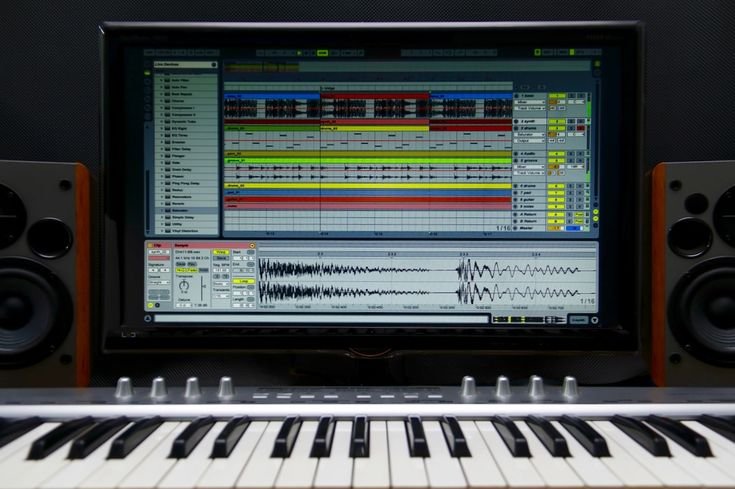
The blank page, the silent DAW, the elusive melody – for every songwriter, these moments of creative stasis are a familiar, often frustrating, part of the journey. But what if you had an always-on collaborator, an endlessly patient brainstorming partner capable of conjuring lyrics, melodies, and full arrangements on demand? This isn't science fiction anymore. Integrating generators into your songwriting workflow is rapidly transforming how music is conceived, produced, and distributed, offering an unprecedented opportunity to streamline your creative process and push the boundaries of your artistic expression.
Imagine leaping past writer's block, effortlessly experimenting with genres you’ve never touched, or churning out high-quality demos in hours instead of days. Songwriting generators, powered by cutting-edge AI, are no longer novelty tools. They've evolved into sophisticated assistants that can elevate your craft, allowing you to focus on the unique human touch that makes your music truly yours.
At a Glance: Leveraging AI in Your Songwriting
- Boost Creativity: Overcome writer's block, explore new styles, and generate novel ideas for lyrics, melodies, and harmonies.
- Accelerate Production: Quickly create demos, backing tracks, and full song components, significantly cutting down production time.
- Enhance Control: Modern generators offer fine-tuned control over genre, mood, tempo, and even vocal characteristics through text prompts and musical parameters.
- Diversify Output: Produce custom content for commercial projects, social media, or adaptive soundtracks with ease.
- Demystify Music Theory: Learners can use generators as real-time tutors to understand structures, progressions, and genre conventions.
- Navigate Challenges: Be mindful of evolving copyright laws, ethical considerations, and the importance of human curation for authentic expression.
Unlocking New Dimensions: What Songwriting Generators Are (and Aren't)
At its heart, a songwriting generator is an AI-driven system designed to automatically or semi-automatically create song components like lyrics, melodies, harmonies, or even full instrumental tracks. Think of it as a computational brain trained on vast datasets of existing music and text, learning the intricate patterns, structures, and emotional nuances that define different genres and styles.
These aren't magic boxes that spit out a perfect, finished hit song with a single click (though some get surprisingly close!). Instead, they're powerful engines for generating raw material, exploring variations, and rapidly prototyping ideas. They leverage advancements in natural language processing (NLP) for lyrics, music information retrieval (MIR) for understanding musical structure, and deep generative models—like the Transformer architectures that power tools such as Music Transformer or the diffusion models used in generative audio—to produce coherent and stylistically consistent outputs.
Historically, these systems evolved from simple rule-based algorithms and Markov chains to sophisticated deep learning models. This journey from basic pattern repetition to understanding long-range structure and style consistency marks a fundamental shift in how we can approach music conception and production. Now, platforms like upuply.com exemplify how these diverse models can be orchestrated within unified workflows, even integrating with image and video generation for truly multimodal creative experiences.
The Power in Your Pocket: Core Capabilities That Redefine Your Workflow
Modern songwriting generators aren't one-trick ponies. They offer a suite of capabilities designed to augment every facet of your creative process:
Intelligent Lyric Generation
Gone are the days of staring blankly at a page, struggling for the right word or a compelling rhyme. AI-driven lyric generators, often built on large language models, excel at:
- Semantic Coherence: Crafting lines that make sense and tell a story, based on your prompts.
- Rhyme and Meter: Adhering to traditional poetic structures or generating free verse as desired.
- Stylistic Control: Directing the AI to write in the tone of "moody indie pop," a "playful children's song," or a "heartfelt ballad."
- Thematic Exploration: Providing a topic, and letting the AI brainstorm diverse lyrical approaches.
This allows you to quickly generate multiple lyrical drafts, pull out compelling phrases, or simply kickstart your imagination when words fail.
Dynamic Music Generation
Whether you need a simple chord progression or a full backing track, AI can conjure musical ideas with remarkable speed and flexibility:
- Melody Creation: Generating catchy vocal lines or instrumental hooks that fit a specified mood or key.
- Harmony and Chord Progressions: Exploring unique chord progressions that evoke specific emotions or genre conventions, providing a fresh harmonic foundation.
- Rhythm and Structure: Laying down drums, basslines, and instrumental layers, often with options to define sections like verse, chorus, and bridge.
- Machine-Readable Music: Outputs are often in formats like MIDI, piano-roll, or chord charts, making them easily editable in your digital audio workstation (DAW).
The beauty here is rapid iteration. You can generate a dozen musical ideas in minutes, quickly identifying the one that sparks your creativity.
Granular User Control: You're Still in the Driver's Seat
Crucially, the best generators aren't black boxes. They empower you with control, allowing you to guide the AI's output through conditional inputs:
- Textual Descriptions: Simple prompts like "upbeat acoustic folk song about travel" can set the overall direction.
- Musical Parameters: Specify key, tempo, time signature, instrumentation, and even vocal range.
- Referential Input: Some advanced systems can learn from existing musical snippets you provide, generating variations or continuations in a similar style.
- External Media: Platforms that integrate multimodal AI might allow visual storyboards or video footage to influence the mood and pacing of the generated music.
This level of control ensures that while the AI does the heavy lifting, your artistic vision remains paramount. The AI serves as an extension of your creative will, not a replacement for it.
From Concept to Creation: A Practical AI-Powered Songwriting Workflow
Integrating generators isn't about replacing your intuition; it's about giving you superpowers. Let's walk through a practical workflow, from initial lyrical ideas to a polished track, using examples of current AI tools.
1. Defining Your Vision and Refining Lyrics for AI Input
Before you even touch an AI tool, start with a clear intent. What's the song about? What mood are you aiming for? What genre best fits your message? Once you have a basic concept, you can begin crafting initial lyrics or lyrical fragments.
Pro-Tip: When preparing lyrics for AI input, structure is key. Clearly label sections (e.g., [Verse 1], [Chorus], [Bridge]). Add specific mood or style cues directly into your prompt or as comments within the lyrics (e.g., (moody indie pop, sung softly by a female vocalist)). Intentional phrasing guides the AI much more effectively and reduces the need for extensive revisions later. Consider the narrative arc, emotional beats, and desired sonic landscape.
2. Generating the Instrumental & Placeholder Vocals
Now, it's time to bring the music to life. Text-to-song platforms are excellent for quickly creating a full backing track and even initial placeholder vocals.
- Text-to-Song Platforms (e.g., Suno AI, Udio AI): These tools allow you to paste your refined lyrics and add a text prompt describing the desired musical style (e.g., "upbeat folk-pop, acoustic guitar, driving drums, male vocals"). They will generate a complete song, often including vocals, in just a few moments. Experiment with different prompts and regenerate until you find a musical foundation that resonates.
- Composition & Stems (e.g., Eleven Music): For more control over individual musical elements, platforms like Eleven Music might be a better choice. Here, you can specify instruments, genre, and structure, and request separate stems (individual audio files for drums, bass, guitar, etc.). This gives you greater flexibility for mixing and further manipulation in your DAW. Always aim for separate stems if possible, as it’s easier to mix and polish later.
Workflow Insight: Don't be afraid to generate several versions. Think of the AI as a musical sketch artist – some sketches will be closer to your vision than others. Keep what works, discard what doesn't, and refine your prompts based on the results.
3. Preparing High-Fidelity Vocal Performance
While AI can generate placeholder vocals, for a truly polished track, you'll often want to replace or enhance them. This is where advanced AI voice tools come in.
- AI Voice Transformation (e.g., SoundID VoiceAI): Tools like SoundID VoiceAI, a VST3/AU/AAX plugin, allow you to transform a recorded vocal performance (either your own scratch vocal or the AI-generated placeholder) into a high-fidelity AI-generated voice. You can choose from a library of royalty-free Voice Packs, experimenting with different tones, genders, and styles.
- Harmonies and Range Shifts: Use features like "Unison Mode" to instantly generate rich vocal harmonies, or "Transpose" to shift the vocal range without introducing unnatural artifacts. This empowers you to create complex vocal arrangements quickly, even if you're not a skilled vocalist yourself. SoundID VoiceAI, for instance, offers over 50 voice/instrument presets to explore.
Consideration: This step bridges human performance with AI enhancement. You might sing the melody yourself and then use AI to fine-tune it, apply a different vocal timbre, or generate backing harmonies.
4. Integrating Vocals and Instrumentals in Your DAW
With your generated instrumental stems and AI-transformed vocals ready, it’s time to bring everything together in your digital audio workstation (DAW) – whether that’s Logic Pro, Ableton Live, Pro Tools, or FL Studio.
- Import: Drag and drop all your generated audio stems (drums, bass, guitars, synths, and AI vocals) into separate tracks in your DAW.
- Align Timing: Carefully align all tracks. While AI is good, minor timing adjustments might be needed, especially if you're layering different AI outputs or a human-recorded element. Use your DAW's grid and time-stretching tools.
- Balance Dynamics: Adjust individual track volumes to achieve a balanced mix. Apply compression to control dynamic range, ensuring no single element is too loud or too soft. Use volume automation to bring elements in and out, creating movement and emphasis.
- Enhance Spatial Feel: Add effects like reverb, delay, and stereo widening to create depth and space in your mix. This makes the track sound more professional and immersive. Pan instruments to create a wider soundstage.
5. Final Polish and Mastering
The final stages involve refining the overall sound and preparing your track for distribution.
- EQ Balance: Listen critically to the entire mix. Use EQ (equalization) to sculpt the frequency balance of each instrument, ensuring they sit well together without clashing. Compare your mix against professional reference tracks in a similar genre.
- Bus Compression: Apply gentle compression to the master bus (the main output of your DAW). This "glues" the mix together, making it sound cohesive and professional.
- Mastering for Loudness: The final step is mastering, which prepares your track for various listening environments and streaming platforms. Apply a limiter to achieve target loudness levels (e.g., -14 LUFS for Spotify) without introducing distortion. This ensures your song sounds consistent and competitive with commercially released music.
By following this integrated workflow, you can move from a nascent idea to a fully produced demo or even a final track significantly faster than traditional methods, freeing up more time for creative exploration and fine-tuning.
Beyond the Hook: Real-World Use Cases for Generators
The utility of songwriting generators extends far beyond just personal projects. They are becoming indispensable tools across various facets of the music industry and beyond.
For Professionals: Overcoming Creative Hurdles & Accelerating Production
Even the most prolific artists face creative blocks. Generators offer a powerful antidote:
- Breaking Block: Generate alternative verses, explore unusual chord progressions, or rewrite lyrics when stuck. This acts as a rapid-fire brainstorming partner.
- Rapid Prototyping: Quickly create rough demos for new songs, allowing artists and producers to hear ideas fully fleshed out before committing significant studio time.
- Genre Exploration: Experiment with unfamiliar genres to broaden your artistic palette or to pitch to specific projects requiring a different sound.
- Pre-Production: Use AI to generate foundational elements like drum patterns or basslines, saving time for session musicians to focus on nuanced performance.
For Commercial Applications: Speed, Scale, and Customization
The commercial world thrives on speed and tailored content, making AI generators invaluable:
- Custom Jingles & Sound Logos: Produce unique, memorable audio branding for businesses in minutes.
- Adaptive Game & XR Soundtracks: Generate dynamic music that responds to in-game actions or virtual reality environments, creating truly immersive experiences.
- Background Music for Content Creators: Quickly create royalty-free background tracks for streams, vlogs, podcasts, and social media content, avoiding copyright issues and licensing fees.
- Personalized Media: Imagine interactive stories where the soundtrack adapts to the user's choices, all generated on the fly.
For Learners & Educators: A Dynamic Teaching Tool
AI can democratize music education, providing hands-on, real-time examples:
- Real-Time Tutoring: Generate examples across different genres and styles to illustrate musical concepts. Want to hear a "blues scale over a jazz chord progression"? The AI can demonstrate it instantly.
- Visualizing Song Structures: See how verse-chorus forms or more complex structures are built, and then hear them in action.
- Interactive Composition: Experiment with altering parameters and immediately hear the musical outcome, fostering a deeper understanding of music theory and arrangement.
- Ear Training: Generate random melodies or harmonies to practice identifying intervals, chords, and rhythmic patterns.
Navigating the Nuances: Key Challenges & Considerations
While the benefits are immense, it's crucial to approach AI songwriting with an understanding of its inherent challenges and ethical considerations.
Copyright & Legal Quandaries: Who Owns the AI-Generated Song?
This is perhaps the most significant evolving area. The debate rages around:
- Training Data Licensing: Were the datasets used to train the AI properly licensed?
- Ownership: Who owns an AI-generated song? The user who prompted it? The AI developer?
- Co-Authorship: If a human extensively edits an AI output, does the AI become a co-author?
- Developer Rights: What rights do AI developers retain over the output of their models?
Current Recommendation: Industry experts generally recommend positioning AI outputs as drafts or starting points for significant human curation and modification. The more unique human creativity you inject, the stronger your authorship claim becomes. Always check the terms of service for any AI generator you use, as they often outline ownership and usage rights.
Bias & Ethics: The Mirror of Our Data
AI models are only as unbiased as the data they're trained on. This can lead to:
- Genre/Language Over-representation: Models might over-reproduce dominant genres or languages, potentially marginalizing niche styles or non-English content.
- Imitation & Plagiarism: There's a risk of models inadvertently imitating existing artists or even generating content that skirts too close to plagiarism.
- Cultural Biases: Prejudices present in training data can be amplified, leading to problematic lyrical or musical outputs.
Mitigation: Developers are working on dataset diversification, style anonymization (to avoid mimicking specific artists), and implementing user controls to guide the AI away from mimicry. As users, we must remain vigilant and apply critical judgment to AI outputs.
Displacement vs. Augmentation: A Human-AI Partnership
The fear of job displacement is common with new technologies. While routine, repetitive tasks (like generating stock music or simple background scores) might be automated, the demand for bespoke, emotionally resonant, and uniquely human music is likely to increase.
AI often functions as an augmentative tool, not a replacement. It empowers human creators to:
- Focus on Higher-Order Creativity: Spend less time on grunt work and more time on emotional depth, narrative, and innovative concepts.
- Increase Output: Produce more content without sacrificing quality, expanding creative reach.
- Collaborate: Treat the AI as a highly efficient collaborator, generating raw material for human refinement.
The future points towards a symbiotic relationship where AI enhances human ingenuity rather than replaces it.
Evaluation: How Do We Know It's "Good"?
Evaluating AI-generated music isn't straightforward. It requires a blend of:
- Quantitative Metrics: Analyzing lyric readability, musical structure (e.g., adherence to key, rhythmic consistency), diversity of output, and novelty.
- Human Evaluation: This remains indispensable. Blind listening tests, professional reviews, and Turing-like tests (can listeners distinguish AI from human?) provide crucial qualitative feedback on emotional impact, creativity, and overall listenability.
Ultimately, "good" music still comes down to its ability to evoke emotion, tell a story, and connect with an audience – qualities that human listeners are best positioned to judge.
Peering into the Future: The Evolving Landscape of AI Songwriting
The trajectory of songwriting generators is one of increasing sophistication, control, and integration. The next wave of innovation will focus on making these tools even more intuitive and powerful for human creators.
Enhanced Interaction Design & Controllability
Future research is heavily invested in creating more seamless and transparent user experiences:
- Editable Outputs: Directly manipulating AI-generated melodies, chords, and lyrics within the generator interface, rather than exporting to another tool for edits.
- Iterative Feedback Loops: Providing nuanced feedback to the AI (e.g., "make this chorus more uplifting," "try a different drum pattern here") and having it respond intelligently.
- Transparent Prompt History: Understanding how specific prompts influenced the AI's output, allowing for more precise control.
- Fine-Grained Control: The ability to manipulate very specific aspects like the emotional arc of a melody, the subtle rhythmic swing of a drum pattern, or the exact harmonic tension of a chord progression.
Explainability & Legal Compliance
As AI becomes more integrated, understanding its decisions and ensuring ethical usage will be paramount:
- Explainable AI (XAI): Models that can articulate why they made certain musical or lyrical choices, helping creators understand and trust the system.
- Embedded Usage Policies: Clear, automatically enforced guidelines on copyright, data usage, and attribution built directly into the platforms.
- Dataset Disclosures: Transparent information about the training data used, giving creators confidence in the ethical sourcing of the AI's "knowledge."
Platforms like upuply.com are already leading these developments, aiming to integrate diverse generative models into a human-centered creative infrastructure. The strategic value of songwriting generators multiplies when embedded within a broader creative stack, where a single creative prompt could yield a coherent song, accompanying visuals, and promotional assets – extending human expressive range while robustly addressing ethical, legal, and cultural considerations. This holistic approach ensures that AI serves as a true partner in the multifaceted journey of artistic creation.
Your Next Steps: Embrace the Co-Creator
Integrating generators into your songwriting workflow isn't just about using a new tool; it's about embracing a new paradigm of creativity. These AI partners offer unparalleled speed, boundless ideation, and the ability to break through limitations, allowing you to iterate faster, experiment more boldly, and focus on the unique human stories only you can tell.
Start small. Experiment with generating a few lyrical verses, try out a new chord progression, or create a quick demo. Don't be afraid to treat the AI as a collaborative sparring partner, challenging it with diverse prompts and refining its outputs with your unique artistic vision. The future of songwriting is not an either/or between human and machine, but a powerful synergy that promises to unlock unprecedented creative potential for artists everywhere. Your next great song might just be waiting for the right prompt.