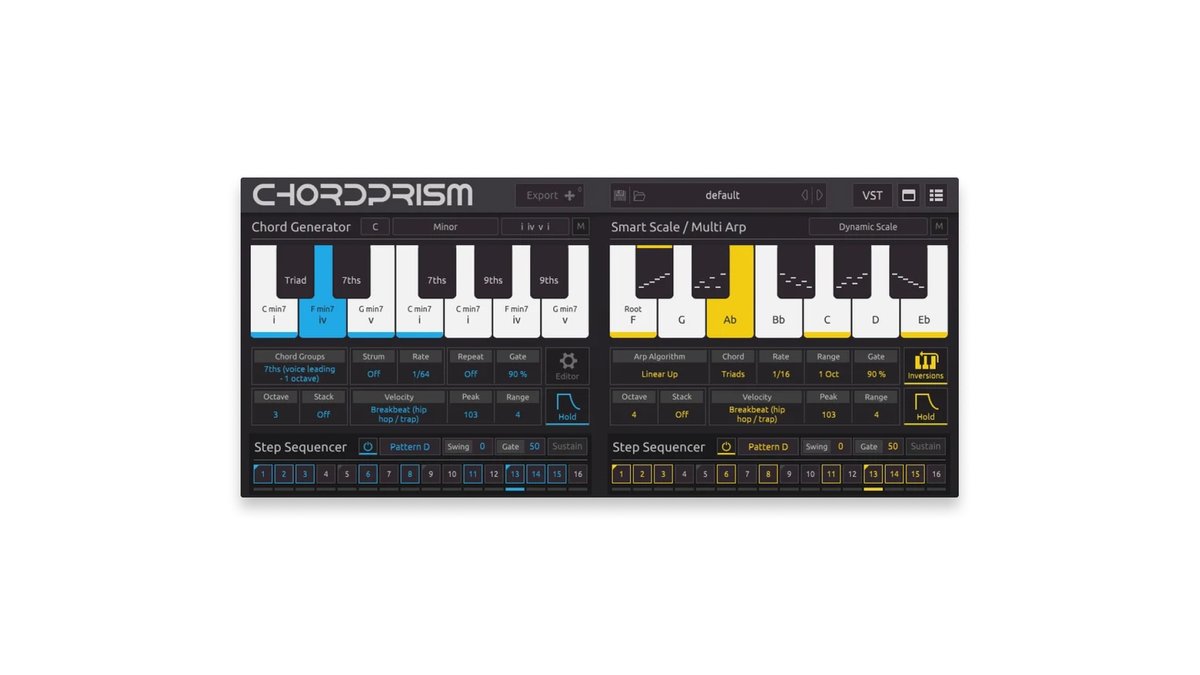
Is your songwriting feeling a little... samey? Do your tracks often start with a familiar strumming pattern, relying heavily on a chord progression that, while functional, doesn't quite capture the unique spark in your head? If you're ready to move Beyond Generators: Developing Your Own Chord Skills is your next big step. This isn't about ditching tools that help you generate custom chord progressions; it's about understanding the underlying mechanics so you can bend them to your will, craft truly distinctive sounds, and create richer, more dynamic songs that stand out.
You've likely felt the frustration described by many songwriters: "I’ve got several songs written, and while all of them have different feelings, different progressions, patterns, etc., they’re all just acoustic guitar strumming with vocals." The goal isn't just to write more songs, but to write songs that breathe, evolve, and surprise, breaking free from the "chord only" mold.
At a Glance: Key Takeaways for Deeper Chord Skills
- Generators are tools, not crutches: Use them for initial ideas, but don't stop there.
- Deconstruct to construct: Understand chord theory (intervals, voice leading, inversions) to build your own.
- Embrace the riff: Start with single-note melodies or basslines to build texture, not just harmonic blocks.
- Beyond strumming: Explore arpeggios, partial chords, and rhythmic variations to add depth.
- Space is musical: Learn when not to play chords continuously; create tension and release.
- Expand your toolkit: Experiment with different instruments and arrangements to enrich your sound.
- Train your ear: Active listening and transcription are your most powerful teachers.
Why Your Songs Deserve More Than Just Chords
Every songwriter starts somewhere, and often, that "somewhere" is a solid set of chords accompanying a vocal melody. It's a fundamental approach, and for good reason: chords provide harmonic bedrock, emotional context, and a clear structure. But if every song in your repertoire follows this exact pattern – chords playing throughout, providing the entire accompaniment – you're leaving a vast landscape of musical possibilities unexplored.
Think about the songs that truly captivate you. Do they always have a guitar or piano strumming chords from start to finish? Often, they don't. You hear intricate single-note riffs, compelling basslines, unexpected instrumental breaks, or moments where the harmony shifts subtly rather than with a full, block chord. The Reddit user's question perfectly encapsulates this desire: "I hear plenty of songs that don’t have chords running the whole song. They might have more of a riff or single note melody carrying the song." This isn't about abandoning chords; it's about making them one powerful arrow in your quiver, rather than your only arrow.
The Generator Trap: When Convenience Becomes a Creative Ceiling
Chord progression generators are fantastic tools for overcoming writer's block, exploring new harmonic ideas, or quickly sketching out a musical foundation. They offer instant gratification, providing a ready-made sequence of chords in various keys and moods. Many artists find them invaluable for kicking off a new idea or experimenting with theoretical concepts without deep knowledge.
However, relying too heavily on these tools can inadvertently limit your growth. If you consistently defer the harmonic decision-making process to an algorithm, you miss crucial opportunities to:
- Develop your ear: You don't learn to hear how chords want to move or what feels good.
- Understand theory practically: You see the "what" (the chords) but not the "why" (the underlying voice leading, tension, and resolution).
- Cultivate unique expression: Your progressions, while technically sound, might start to sound generic or predictable, lacking your personal stamp.
- Break free from common patterns: Generators, by nature, often lean on well-established, pleasing progressions, which can inadvertently keep you in a harmonic rut.
The goal isn't to demonize generators, but to treat them as stepping stones. Use them to inspire, then dissect, adapt, and ultimately, transcend their suggestions by developing your own innate sense of harmony.
Deconstructing Harmony: Beyond the Chord Name
To truly develop your own chord skills, you need to understand what makes a chord tick, not just its name. This means diving into the fundamentals of intervals, voice leading, and inversions. It sounds theoretical, but these are practical tools that unlock endless creative possibilities.
Intervals: The Building Blocks of Emotion
Every chord is built from intervals – the distance between two notes. Understanding intervals allows you to:
- Build chords from scratch: Instead of memorizing shapes, you know why a C major chord is C-E-G.
- Modify existing chords: Want a Cmaj7? Add a B (a major 7th interval from C). Want it darker? Change the E to Eb for C minor.
- Hear the character of each note: Each interval has a distinct emotional flavor. A major third feels bright, a minor third melancholic, a perfect fifth stable, a tritone dissonant.
Try This: Take a simple C major chord. Play each note (C, E, G) individually, then identify the interval between each note and C (C to E is a major third, C to G is a perfect fifth). Now, try to play just the C and E, then the C and G. Notice how different two-note combinations feel even within the same chord.
Voice Leading: The Art of Smooth Transitions
Voice leading is the horizontal movement of individual notes within a chord progression. When you play a G major chord followed by a C major chord, each note in the G (G-B-D) moves to a corresponding note in the C (C-E-G). Good voice leading aims for:
- Smallest possible movements: Individual notes moving by a step or half-step, rather than large leaps, creates a smooth, connected sound.
- Common tones: Keeping one or more notes the same between chords provides a sense of stability.
Poor voice leading often leads to a "clunky" sound, where chords feel disconnected. Imagine a choir where everyone jumps huge distances between notes; it wouldn't sound as cohesive as singers moving smoothly.
Example: - Clunky: G (G-B-D) to C (C-E-G) – The G stays, B jumps to E, D jumps to C. (Often played as open chords on guitar).
- Smoother Voice Leading: G (D-G-B) to C (C-E-G) – The G stays, D moves to C (step down), B moves to E (minor third up, still relatively smooth). Or even G (B-D-G) to C (C-E-G) – B moves to C, D moves to E, G stays. This creates a much more flowing sound.
Inversions: Flipping Chords for New Perspectives
An inversion occurs when a note other than the root is in the bass. A C major chord (C-E-G) in root position has C as the lowest note.
- First Inversion: E-G-C (E is the lowest note)
- Second Inversion: G-C-E (G is the lowest note)
Inversions don't change the chord's fundamental quality (it's still C major), but they drastically alter its feel and how it moves to the next chord. - Why use them?
- Smoother basslines: The bass note can move stepwise between chords, even if the chords themselves are far apart.
- New textures: Inversions sound subtly different because the intervals above the bass note are rearranged.
- Vocal range: They can help keep a melody in a comfortable vocal range by changing the chord's lowest note.
Try This: Play a simple I-IV-V progression (C-F-G) in root position. Now, try to play it using inversions to make the bassline move smoothly, perhaps C (root) to F (first inversion with A in the bass) to G (first inversion with B in the bass). Notice the difference in the bass movement and the overall feel.
The Riff Revolution: Single-Note Ideas as Your Bedrock
Many songwriters automatically reach for chords. But what if you started with a single-note melody or a compelling bassline instead? This is often how those "songs that don't have chords running the whole song" come to life. The Reddit user asks, "Does finding a riff over a chord progression help?" Yes, absolutely, but sometimes, the riff is the foundation.
Starting with a Riff: The Melodic Core
Imagine a memorable guitar riff. Often, it's just a few notes, but it's catchy, rhythmic, and defines the song. Think of "Seven Nation Army" or "Smoke on the Water." These aren't full chord progressions; they're iconic single-note lines.
- How to start:
- Hum a melody: Don't think chords. Just hum or sing a simple, rhythmic phrase.
- Find it on your instrument: Translate that phrase to your guitar, piano, or bass.
- Build around it: Once you have a strong riff, you can then imply harmony with a bass note, or later, add sparse chords that complement the riff without overpowering it. The riff provides the backbone, and the harmony becomes an accompaniment, not the sole driver.
Developing Riffs Over Existing Chords: Adding Texture
If you already have a chord progression, a strong riff can transform it from a simple strumming pattern into something much more engaging. This is where the Reddit user's question about finding a riff over a chord progression comes in.
- Target chord tones: Play arpeggios of your chords, then extract rhythmic fragments from them. For a C major chord, you might play C-E-G-E-C.
- Use scales: Identify the key of your progression and create melodic ideas using notes from that scale, ensuring they generally sound good against the current chord.
- Counter-melodies: Write a secondary melodic line that interacts with your main vocal melody or the chord progression itself. This creates a call-and-response effect.
- Basslines as riffs: Don't underestimate the power of an active, melodic bassline. A bass guitar playing a compelling riff can often carry a song, allowing other instruments to provide much sparser harmonic support.
Example: You have a C-G-Am-F progression. Instead of strumming, try playing a simple C note on the C chord, then a G note on the G chord, and so on. Now, add a passing note or two to each of those bass notes, making them into a mini-riff that guides the ear through the progression.
Beyond Strumming: Exploring Voicings and Textures
The "acoustic guitar strumming with vocals" dilemma often stems from a limited approach to how chords are played. Strumming is one way, but it's just the beginning.
Open Voicings and Partial Chords: Creating Space
- Open Voicings: These use wider intervals between notes, often skipping strings on a guitar or registers on a piano. They tend to sound more airy, expansive, and less "dense" than closed, block chords. They're excellent for creating atmosphere.
- Partial Chords (Diatonic Fragments): Instead of playing the full C major triad (C-E-G), you might play just C and G, or E and G. These imply the chord without explicitly stating it, leaving room for other instruments or the vocal to fill the sonic space. They're fantastic for nuance and avoiding a cluttered sound.
Try This: Play a C major chord using only the E, G, and high C on your guitar or keyboard. Notice how it feels different from the full open C chord. Experiment with playing just two notes from a chord, especially higher up the neck on a guitar, to create delicate textures.
Arpeggiation vs. Strumming: Controlled Movement
Arpeggios are simply the notes of a chord played one after another, rather than simultaneously.
- When to use: Arpeggios create movement, shimmering textures, and can highlight individual notes within a chord. They can be subtle background elements or become a prominent melodic feature.
- Fingerstyle techniques: For guitarists, developing fingerstyle skills allows for independent control over each note, enabling complex arpeggiated patterns, basslines, and melodies to be played simultaneously. This is a powerful way to build intricate solo arrangements that sound full without constant strumming.
Example: Instead of strumming an Am chord, try picking the A, E, C, E, A notes individually in a rhythmic pattern. This instantly adds complexity and movement.
Rhythm is King (or Queen): Crafting Dynamic Grooves
A common pitfall is to apply the same 4/4 strumming pattern throughout a song. Rhythm is as crucial as harmony and melody in making a song engaging.
Beyond 4/4: Exploring Time Signatures and Subdivisions
- Vary time signatures: While 4/4 is standard, don't shy away from 3/4 (waltz feel), 6/8 (a flowing, rolling feel), or even more complex signatures like 5/4 or 7/8 for specific effects.
- Subdivisions: Play with eighth notes, sixteenth notes, triplets, or even longer durations. Don't feel obligated to play on every beat.
Syncopation and Rests: The Groove Makers
- Syncopation: Playing notes off the main beat or accenting weak beats. This creates rhythmic tension, forward momentum, and makes a pattern feel less predictable. Instead of "1-and-2-and-3-and-4-and," try "1- and -2- and -3- and -4- and."
- Rests: Silence is golden. Knowing when not to play is as important as knowing when to play. Strategic rests create breathing room, emphasize the following note, and build anticipation. Many powerful riffs rely heavily on silence to make their impact.
Try This: Take a simple chord progression and strum it with a basic down-up pattern. Now, try to introduce syncopation by missing some downbeats or emphasizing upbeats. Then, add a few strategic rests, allowing the chord to ring out briefly before the next one. Notice how the feel of the song completely changes.
The Power of Space: When Less is More
One of the most effective ways to move "beyond chord only" songs is to embrace the concept of space. Not every instrument needs to play continuously.
Not Having Chords Run the Whole Song: Dynamic Variation
The Reddit user noted: "I hear plenty of songs that don’t have chords running the whole song." This is a key insight.
- Instrumental breaks: Instead of a full band chord progression, let a single instrument (guitar riff, bassline, vocal ad-lib) carry a section.
- Dynamic shifts: Move from a full, strummed section to a sparse, arpeggiated one. Drop instruments out completely, then bring them back in. This creates emotional arcs and keeps the listener engaged.
- Build-ups and breakdowns: Use fewer instruments and simpler arrangements in verses, then introduce more complex chords and full instrumentation in choruses, or vice-versa.
Example: Imagine a verse where only the bass guitar plays a simple, melodic line, and the vocalist sings over it. The harmony is implied, but not explicitly stated by full chords. Then, the chorus bursts in with full strummed chords. This contrast is incredibly powerful.
Instrumentation Matters: Expanding Your Sonic Palette
Your choice of instrument dramatically influences how chords and melodies are perceived. "Does starting with electric help?" Yes, it absolutely can.
Electric vs. Acoustic: Different Worlds of Sound
- Acoustic Guitar: Often emphasizes full, open chords, strumming patterns, and a natural, resonant sustain. Great for direct, intimate delivery.
- Electric Guitar: Offers a vast array of tones (clean, distorted, reverbed, delayed), sustains longer, and is often used for single-note riffs, leads, and power chords (often just root and fifth, implying harmony rather than stating a full triad). The attack and decay characteristics are very different. Often, a riff on an electric will feel less "chordal" even if it outlines a harmony.
Why Electric Helps: Starting with an electric can naturally steer you towards riffs and single-note lines because its sustain and effects often make block chord strumming feel less immediate than on an acoustic. It encourages melodic thinking and texture layering.
Introducing Other Instruments: The Ensemble Approach
You're not limited to just one instrument. Think about how different instruments contribute to the harmonic and rhythmic landscape:
- Bass Guitar: The rhythmic and harmonic anchor. A strong, melodic bassline can imply the chords for the entire band.
- Drums/Percussion: The rhythmic backbone. They dictate the groove, feel, and energy, influencing how instruments interact.
- Keyboards (Piano, Organ, Synth): Offer rich harmonic layering, pads for atmosphere, or melodic counterpoints. Synthesizers can create entirely new sonic textures that don't rely on traditional chord shapes.
- Strings/Horns: Can provide sustained harmony, lush counter-melodies, or powerful stabs.
Arrangement Concept: Instead of one instrument playing all the chords, consider having different instruments contribute parts of the harmony. The bass plays the root, a guitar plays a third and seventh, and a keyboard plays an extended tone. This "distributed harmony" creates a much richer, more complex sound than one instrument trying to do everything.
Training Your Ear: The Ultimate Skill Developer
All the theory and technical exercises in the world will only take you so far if your ear isn't engaged. Your ear is your most powerful tool for truly developing your own chord skills.
- Active Listening: Don't just listen to music; analyze it.
- What are the instruments doing?
- Can you identify the bassline?
- Are the chords strummed, arpeggiated, or implied?
- When do instruments drop out? When do they come in?
- How does the harmony make you feel?
- Transcribing: Try to learn songs by ear. Pick out basslines, guitar riffs, and chord changes. Start with simple songs, then challenge yourself. This forces you to connect what you hear with what you can play and understand structurally. Even just figuring out the melody by ear is a huge step.
- Singing What You Play: When you play a chord, sing the root, then the third, then the fifth. Sing the melody you're trying to play on your instrument. This strengthens the connection between your inner musical ear and your physical execution.
Practical Exercises & Creative Prompts
Here are some specific actions you can take to move beyond basic chord reliance:
- Chord Voicing Exploration: Take a single chord (e.g., C major) and find at least five different ways to play it on your instrument, including inversions, open voicings, and partial chords. Pay attention to how each sounds and feels.
- Bassline First: Write a simple, compelling bassline (4-8 measures) before you even think about chords or melody. Then, try to write a melody and chords that fit that bassline.
- Riff Foundation: Start a new song by improvising a short, rhythmic single-note riff. Build the rest of the song (melody, harmony) around that riff.
- One-Note Melody Challenge: Try to compose a short, interesting melodic phrase using only one note (e.g., C). Then, try to add a moving bassline underneath it, and finally, imply harmony with minimal chord tones. This forces you to focus on rhythm and interaction.
- Deconstruct a Favorite Song: Choose a song you love that doesn't rely on constant strumming. Analyze how it uses space, riffs, different instruments, and varied chord voicings. Try to learn the parts by ear.
- Rhythmic Reimagining: Take an existing chord progression you've written. Instead of strumming, try arpeggiating it with a syncopated rhythm. Then, try playing only the root and fifth, adding rests.
- Harmonic Expansion: Pick a simple chord (e.g., C major). Experiment with adding extensions (9th, 11th, 13th) or alterations (b9, #11) to create new sounds. Don't worry about "rules" yet; just listen to what you like.
Common Pitfalls & How to Avoid Them
- "Too much theory, not enough playing": Don't get bogged down in academic theory. Learn concepts and immediately apply them to your instrument. Theory is descriptive, not prescriptive.
- Fear of dissonance: Not every note has to be perfectly consonant. Strategic dissonance creates tension, which makes resolution feel incredibly satisfying. Experiment with "wrong notes" – sometimes they're surprisingly right.
- Always playing in the same position: On guitar, try moving up the neck to find different chord voicings. On piano, explore different octaves and hand positions. Get out of your comfort zone.
- Ignoring rhythm: Harmony and melody are nothing without rhythm. Make sure your rhythmic ideas are as developed as your harmonic ones.
- Comparing yourself to others: Your journey is unique. Focus on your own growth, not on sounding like someone else.
- Expecting instant results: Developing these skills takes time, patience, and consistent practice. Celebrate small victories.
Your Journey Forward: Embracing Deliberate Practice
Moving beyond generators isn't about complexity for complexity's sake. It's about finding freedom, developing your unique voice, and enriching your songs with intention and artistry. It's about understanding the "why" behind the "what," and empowering you to make conscious creative choices.
Start small. Pick one concept from this guide – maybe focus on basslines for a week, or experiment with inversions. Incorporate deliberate practice into your routine: set a specific goal for each practice session, focus intently, and analyze your results. Listen actively to music around you, not just for enjoyment, but for inspiration and dissection.
Your songs deserve to evolve, to breathe, and to tell their stories in the most compelling way possible. By developing your own chord skills, you're not just learning a few new tricks; you're unlocking a lifelong journey of musical discovery and expression. So put down the generator for a moment, pick up your instrument, and start crafting the richer, more dynamic songs that are waiting inside you.